
A Guide to Monti, the Oldest Neighbourhood in Rome
The first rione of the city, on the slope between the Roman Forum and Santa Maria Maggiore. I did not grow up here. I chose it, and this is everything I have learned since.
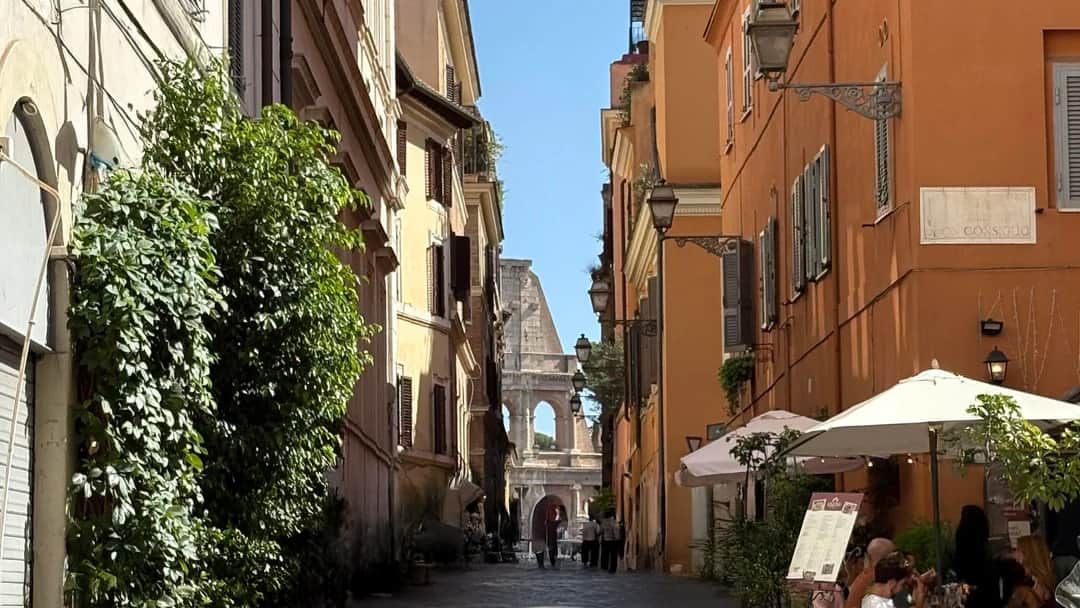
What Monti is
Monti is rione I, the first of Rome's historic districts, numbered from the centre outward. It occupies the valley and slopes behind the Imperial Fora, bounded roughly by Via Cavour, Via Nazionale, Via dei Fori Imperiali and the hill of the Esquiline.
What makes it unusual among central Roman neighbourhoods is very simple: people live here. Not exclusively, and fewer than twenty years ago, but enough that these streets still have a greengrocer, a hardware shop and a pharmacy alongside the wine bars. You are inside the historic centre without being inside the machinery built for visiting it, and that difference is the whole reason I live where I live.
The streets are narrow and cobbled with sampietrini, the facades are the ochre and umber that give central Rome its colour, and the shopfronts are small and independent almost without exception. Monti is the most quietly sophisticated quarter in the centre, and it became that by accident rather than by design, which is exactly why it works. It is a place for walking slowly and looking up.
The Suburra beneath it
In antiquity this valley was the Suburra: a dense, working quarter pressed up against the back of the Forums. Tall insulae apartment blocks, workshops, taverns, performers, and a standing reputation for smoke, scandal and the occasional fire.
The detail that tells you most about it: senators would step out of the Forum, the official stage of Roman politics, and slip into the Suburra to drink, cut deals and visit the brothels. People joked that the real politics happened here rather than up there. Julius Caesar grew up in these streets, a patrician with an ancient name and no money, living among the shopkeepers.
The enormous grey wall that still closes off the Forum of Augustus at the bottom of the neighbourhood was built as a firebreak, to stop the Suburra's fires reaching the marble city. It is the most direct surviving statement of what official Rome thought of this neighbourhood, and it has not moved.
The full history of the Suburra, and how to read it in the streets →
Finding your way
Monti has no grid. The lanes follow a valley and the property lines of people two thousand years dead, which is why they bend for no visible reason and why it took me months to stop taking wrong turns. Four streets will orient you, and after two days you will not need a map at all:
- Via Urbana, the long spine of the rione, running from near Santa Maria Maggiore down toward the Forum. Our own street.
- Via del Boschetto, the shopping street, dense with independent boutiques and vintage.
- Via dei Serpenti cuts across the others, down toward the Fori Imperiali.
- Via Panisperna, the upper route, quieter, with the better views back over the rooftops.
They converge on Piazza della Madonna dei Monti, the small square with a fountain that serves as the neighbourhood's living room, and where I end up most evenings without having decided to. If you are ever lost in Monti, walk downhill. You will reach either the piazza or the Forum, and both are good outcomes.
What to see, and how far it is
Everything below is on foot from our front door. The times are mine, walked rather than estimated, and given as ranges because the honest answer depends on how often you stop.
- The Colosseum Downhill through Monti, and the walk is the good part of the day.
- The Roman Forum and Imperial Fora The same direction, entered from Via dei Fori Imperiali.
- Trajan's Markets The great curved market hall at the foot of the Quirinal.
- Santa Maria Maggiore Uphill at the far end of the neighbourhood, with the fifth-century mosaics.
- San Pietro in Vincoli (Michelangelo's Moses) Free to enter, usually quiet, and most visitors to Rome miss it.
- The Domus Aurea Nero's buried palace, on the hill above the Colosseum. Book ahead.
- Santa Prassede Small and easy to walk past; the Byzantine mosaics are among the best in Rome.
- Santa Pudenziana One of the oldest places of Christian worship in the city.
- Piazza della Madonna dei Monti The neighbourhood's living room, and where the evening happens.
- Cavour metro (line B) The nearest station. Colosseo and Termini are walkable too.
The churches of Monti are the part almost everyone misses, and they are the part I would fight for. San Pietro in Vincoli holds Michelangelo's Moses and costs nothing to walk into. Santa Prassede is so plain from the street that you will walk past it twice, and its side chapel holds some of the finest Byzantine mosaics in Rome. Go in the late afternoon, when the gold takes the light.
Eating and drinking
Monti eats well, and the reason is structural rather than romantic. A serious share of the tables here are taken by people who live within four hundred metres and who will be back next week. That is a far harsher market than a terrace with a view of a ruin, and it raises the floor for everybody.
These are the doors I actually walk through, all of them a few minutes from ours. The list is short because it is honest, and I would rather give you seven places I love than forty I have read about.
- La Taverna dei Fori Imperiali If you have one proper Roman dinner in you, give it to this family. The kitchen is small, the cacio e pepe is exact, and the room has the particular warmth of a place that is run by people who are related to one another. It fills every night, so write to them before you fly. I would rather you booked ahead than stood outside.
- Aromaticus Directly across the street from our front door, and the reason nobody in your group has to eat badly for being vegetarian. Herbs growing in the window, vegetables treated as though they were the point rather than the apology. I go for lunch more often than I admit.
- Broccoletti A minute down the hill, and the place I send anyone who wants to understand why Romans are so certain about their own food. Order the carbonara. Do not ask for it to be changed in any way. This is the dinner people write to me about afterwards.
- Tettarello Round the corner, cheap, entirely without ceremony, and completely honest. Pizza, pasta, house wine in a carafe. It is where you go on the fourth night, when you have walked eleven kilometres and nobody has the strength to decide anything. I love it for exactly that.
- Trieste Pizza A few steps to your right as you come out of the door. Pizza al taglio, cut with scissors, weighed and handed over in paper. The answer to arriving at eleven at night with a suitcase and no plan, which is how I first arrived here.
- Caffè Monti The morning coffee. Stand at the bar the way everyone else does, drink it in three mouthfuls, say buongiorno to whoever is beside you. It took me a while to learn that this is not a rushed way to have coffee. It is a sociable one.
- Mercato Rionale Monti Our neighbourhood market, small and unglamorous and completely alive. Pippo Tortellino makes the pasta in front of you. Buy it, take it up the stairs, cook it that evening in the kitchen you are paying for. It is the single most Roman thing you can do in this flat.
The evening
- Fafiuché My wine bar. Hundreds of Italian labels with a serious weight of Piedmont behind the counter, and a tiny kitchen sending out Piedmontese and Pugliese plates to keep them company. Ask the people pouring what they are excited about and then order that, whatever it is. Evenings only, and it fills, so book.
- Piazza della Madonna dei Monti Not a bar but the heart of the whole thing: a small sloping square with a fountain, where Monti sits on the steps at seven in the evening with a glass and watches the neighbourhood go past. Wine bars line the lanes around it. Take a drink outside, find a step, stay longer than you meant to.
Everywhere else, the ordinary rules of central Rome still hold. Avoid any menu with photographs on it, anyone standing outside inviting you in, and any table with a direct view of a famous ruin. And book. Romans eat late, and turning up at half past eight without a reservation is optimism rather than a plan.
Shops and markets
This is what Monti is known for among Romans, and it is what I fell for first. The ground-floor spaces along Via del Boschetto, Via Urbana, Via dei Serpenti and Via Panisperna are independent almost without exception: clothing, vintage, jewellery, ceramics, small design studios, a bookbinder. You can walk for streets at a stretch without passing a single chain, which in a European city centre in this decade is close to a miracle.
- LOL Two bright rooms just below Piazza degli Zingari, mostly Italian labels with a few Belgian and French ones threaded through, all of it classic cuts made modern. This is where I go when I want something I could not have found at home, and it is the shop I most often send guests to.
- Le Nozze di Figaro Fashion, jewellery and accessories, chosen by someone with a point of view. Go in even if you are not buying. The pleasure is in how it has been put together.
- King Size Vintage The well-known one, and deservedly. Eclectic, well edited, and the place where you find the jacket you did not know you were looking for.
- Pifebo Louder, bolder vintage. Come here for the print nobody else at home will be wearing.
- Humana Vintage Second-hand and inexpensive, and a proper rummage rather than a curated hunt. Give it half an hour and low expectations, and it will occasionally astonish you.
An hour spent in these shops is one of the very few ways to leave Rome carrying something that is neither a fridge magnet nor a handbag you could have bought at home. Go in even when you are not buying. Half of these rooms are worth seeing for how they have been arranged.
Two walks, street by street
Both of these start at our own front door on Via Urbana. If you are staying somewhere else in Monti, join them at Piazza della Madonna dei Monti and read on from there.
One hour, before dinner: the loop of the rione
Turn right out of the door and walk down Via Urbana, past Broccoletti and Trieste Pizza. Take the first turning right, up Via degli Zingari, which opens after fifty metres into Piazza degli Zingari: a small sloping square with a fountain that most visitors to Rome never find, and where LOL keeps its two rooms of clothes.
Come back down to Via Urbana and keep going until it ends at Via dei Serpenti. Turn left, downhill, and two minutes later the street delivers you into Piazza della Madonna dei Monti, the fountain, the steps and the early evening. Fafiuché is thirty metres along Via della Madonna dei Monti if you want the wine list rather than the plastic cup.
To close the loop, take Via del Boschetto uphill out of the piazza. This is the shopping street: independent, ground floor, no chains for its whole length. Near the top turn right along Via Panisperna, the quieter high route with the views back over the rooftops, and it returns you to the top of Via Urbana. An hour at a Roman pace, less if it starts raining.
Half a day, on foot: mosaics, Moses and the Colosseum
Turn left out of the door and go up Via Urbana instead. On the right, sunk well below the modern street, is Santa Pudenziana, built into a Roman bath house and one of the oldest places of Christian worship in the city. Carry on to Via Cavour, cross it and climb the last hundred metres to Santa Maria Maggiore for the fifth-century mosaics along the nave. Round the back, on Via Santa Prassede, an unremarkable door leads into Santa Prassede: go in, pay the light in the side chapel, and look up. It is the best ten minutes in the neighbourhood.
Walk back down Via Cavour, and roughly halfway along, on the right, you will find the Salita dei Borgia, a covered stone staircase that climbs to San Pietro in Vincoli and Michelangelo's Moses. It is free, it is usually quiet, and almost everyone in Rome that morning is queueing somewhere else.
Come back down and follow Via Cavour to its end at Largo Corrado Ricci, where the Imperial Fora open up below the road. From here walk the length of Via dei Fori Imperiali with the Roman Forum on your right and Trajan's Markets behind your left shoulder, straight at the Colosseum. Even people who have seen a thousand photographs stop walking at about the halfway point.
Coming home, ignore the main road. Take Via del Colosseo and then Via della Madonna dei Monti back up into the lanes; it is the same distance, it is quiet, and it ends in the piazza rather than in traffic. Lunch at La Taverna dei Fori Imperiali is on that street. Book it before you set off.
Getting around
On foot. Almost everything. The Colosseum, the Forum, the Trevi Fountain, the Quirinale and Termini are all walkable from the middle of the rione, and walking is how the neighbourhood is meant to be used.
Metro line B. Cavour sits at the bottom of the neighbourhood, one stop from Termini and therefore one connection from both airports. A single BIT ticket is €1.50 and stays valid for 100 minutes across metro, bus and tram.
Metro line C, and go and look at it. The new Porta Metronia and Colosseo / Fori Imperiali stations opened in December 2025, and the second of them is a short walk downhill from Monti, at the Colosseum end of Via dei Fori Imperiali, where it interchanges with line B. It is worth arriving early for: the digging that built it turned up wells and the bath house of a Roman home, and the station was finished as a museum, with exhibition areas built into the passages so that the walk from the platform to the street runs through two thousand years of what was found under the road. Most stations are somewhere to leave. This one is somewhere to stand still for ten minutes. More on the new station →
By car: don't. Monti is inside the ZTL, Rome's limited traffic zone. Cameras read every plate and the fine arrives months later via the hire company. Licensed taxis may enter, so a taxi to the door is always safe.
Practical notes
- Wear real shoes. The sampietrini are uneven and polished slippery by centuries of feet. They are beautiful and they punish thin soles and any heel at all. I learned this the expensive way, in my first month.
- Drink from the fountains. The cast-iron nasoni run constantly with cold, clean drinking water. Block the spout with a finger and it arcs upward. Carry a bottle.
- The hill is real. Monti is a slope, and everything you walk down in the morning you will walk back up in the evening. Plan the day around that and it becomes a pleasure rather than a surprise.
- Cover shoulders and knees for churches. It is enforced, and being turned away after a long walk is a bad twenty minutes.
- Ordinary city sense applies. Monti is generally safe and feels like the residential neighbourhood it is at night. Stick to well-lit streets late, as anywhere. Pickpocketing is a problem on crowded transport and around the major monuments rather than on these lanes.
If something goes wrong
- 112 General emergencies and police, the single European number
- 118 Medical emergencies and ambulance
- 115 Fire brigade
The nearest major hospital is Policlinico Umberto I. Both pharmacies on Via dei Serpenti post the night and weekend rota on the door, which is how the whole country does it, and it works. Italian pharmacists will listen properly to a small complaint, which is something I have come to rely on.
Where to buy things
- Carrefour Express Our own street, a few doors down the hill. This is where I go for the small things: coffee, milk, wine, whatever the recipe needs at eight in the evening. Open late, every day.
- Pam Local The same street, further down toward the lower end, and a little larger. The one for a proper shop on the first morning, when you want to fill the fridge and then not think about it again.
- Farmacia Savignoni The pharmacy I use. Italian pharmacists will listen properly to a small problem and are worth asking. Night and weekend rotas are posted on the door of every pharmacy in the country.
- Farmacia Enei The other one on the same street, for when the first is closed.
- Bici & Baci Bicycle hire, if you want to leave the neighbourhood under your own power.
- TopBike Rental Bicycles and guided rides, further down toward the Colosseum.
Staying in Monti
The argument for basing yourself here rather than in Trastevere or beside the Pantheon is not that Monti is prettier, although on a particular kind of evening I think it is. It is that from here the least walking gets you the most Rome, the metro is there on the days your legs have had enough, and at the end of a long day you come home to a neighbourhood rather than to an attraction. That was my reasoning when I chose it, and nothing since has made me want to move.
Monti or Trastevere? An honest comparison →
A whole day in Monti, hour by hour →
What a design apartment in Rome should actually mean →
Questions people ask me about Monti
Is Monti a good area to stay in Rome?
It is the area I chose to live in, so I am not neutral. It is the first rione of Rome, inside the historic centre, still genuinely residential, and it puts the Colosseum, the Roman Forum, the Trevi Fountain and Termini all within walking distance. If you want to live in Rome for a week rather than tour it, I do not think there is a better address.
Is Monti walking distance from the Colosseum?
Yes. From our door on Via Urbana the Colosseum is six to eight minutes downhill on foot and the Roman Forum is five. Those are my own times, walked rather than estimated, and given as ranges because it depends how often you stop to look up.
Is Monti safe at night?
Monti feels like the residential neighbourhood it is, including late in the evening, and I walk home through it without a second thought. Ordinary city sense applies as it would anywhere: stick to lit streets, and know that pickpocketing in Rome is a problem on crowded transport and around the big monuments rather than on these lanes.
Monti or Trastevere: which should I choose?
Monti if this is your first time in Rome and you want the ancient city on your doorstep, with a quiet street to come home to. Trastevere if you have been before and what you want is to eat late, drink later and wander. Trastevere is noticeably louder at midnight, which is either the attraction or the problem depending on who you are.
What is Monti known for?
Independent shops, vintage, and eating well. The ground floors along Via del Boschetto, Via Urbana, Via dei Serpenti and Via Panisperna are almost entirely small and independent, and the restaurants are held to a high standard by the people who live here and come back every week. It is also the ancient Suburra, where Julius Caesar grew up.
Can you drive or park in Monti?
Not really, and you should not try. Monti sits inside Rome’s ZTL, the limited traffic zone, where cameras read every plate and the fine reaches you months later through the hire company. Licensed taxis may enter, so a taxi to the door is always safe. If you are driving to Rome, leave the car outside the zone.
Which metro station is Monti?
Cavour, on line B, sits at the bottom of the neighbourhood and is one stop from Termini. Since December 2025 the new Colosseo and Fori Imperiali station on line C is also a short walk downhill, and it is worth arriving early for: it was finished as a museum of what the excavation found. A single ticket costs €1.50 and lasts 100 minutes.
When is the best time of year to visit Monti?
April, May, late September and October, when the light is long and the stone is not holding the heat. July and August are genuinely punishing between eleven and four, and August is also when many small shops close. Winter here is underrated: the churches are empty, the light is low and gold, and you can get a table anywhere.
Stay on Via Urbana, in the middle of all this
My apartment: 90 m² for six, two bedrooms and two bathrooms, on one of the streets described above.
Check dates