
What a Design Apartment Actually Means
The phrase is used to sell almost anything. Here is what it should mean, and what to ask before you book.
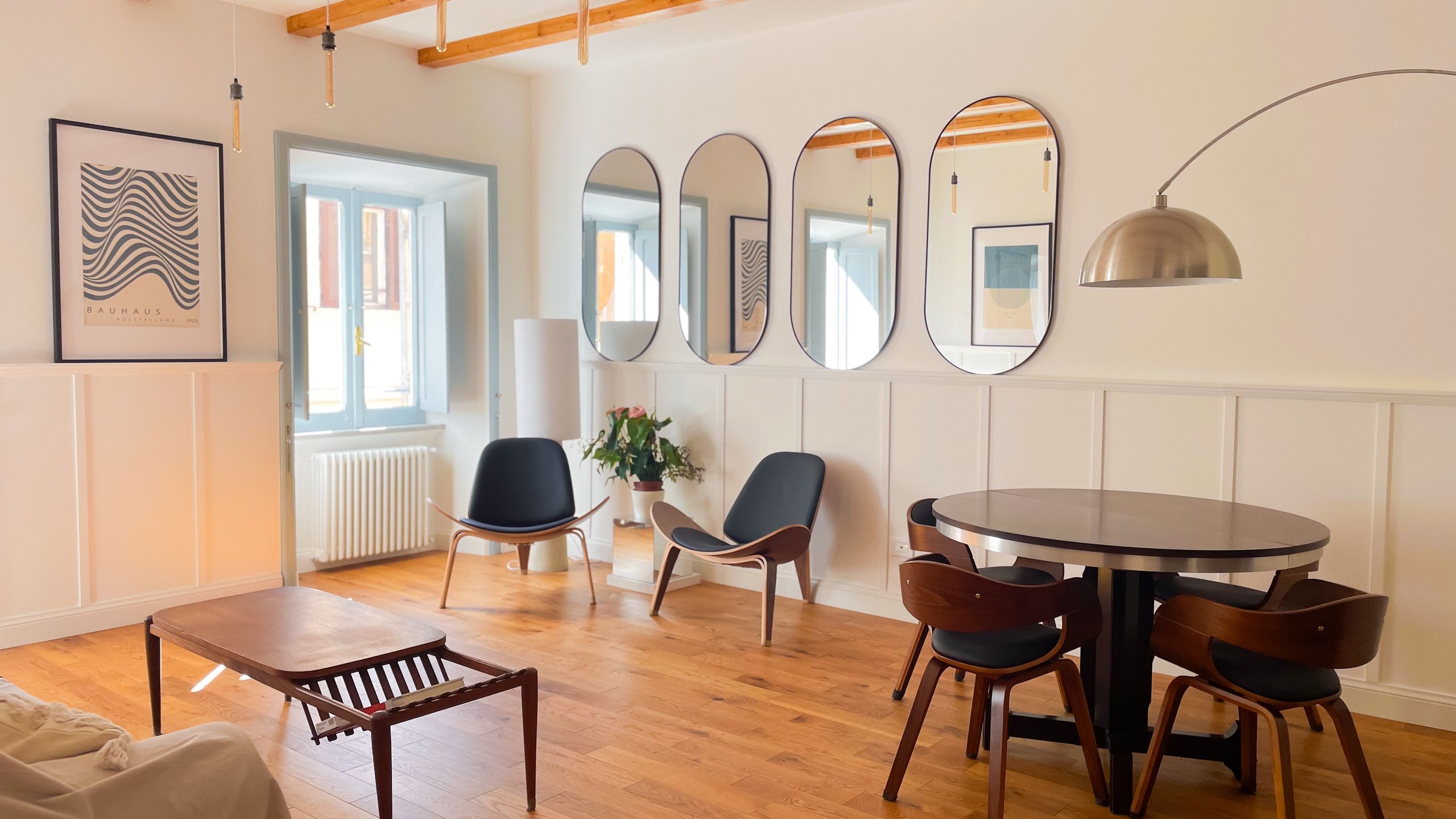
Search for a design apartment in Rome and you will be shown several hundred flats, most of which have in common only a grey sofa, a track light and a photograph taken with a very wide lens. The phrase has been worn almost smooth. I use it about our own apartment, which obliges me to say what I think it ought to mean.
Design is what you notice on the fourth day, not in the photographs
A room can photograph beautifully and be miserable to live in. The wide lens flatters everything; it cannot tell you whether there is anywhere to put a suitcase, whether two people can pass each other in the kitchen, whether the reading light is on the correct side of the bed.
What I care about is the fourth day. By the fourth day the novelty of a place has worn off entirely and you are simply living in it. That is when you find out whether somebody thought about where you would drop your keys, whether the bathroom door opens into the person using the basin, whether the table is big enough to eat at properly rather than decoratively.
Good design is almost invisible when it works. You notice only that you are comfortable and cannot immediately say why.
The specific decisions I made here, and my reasoning
I will be concrete, because generalities are cheap.
Two bedrooms at opposite ends, each able to reach a bathroom without crossing the living room. This is the single decision I am proudest of. It is what allows two couples, or a family with teenagers, to keep entirely different hours without anyone having to tiptoe or apologise. Most flats this size in the centre put both bedrooms off one corridor and one bathroom at the end of it.
A dining table you can actually sit six people around. Not a console with two stools. The evenings that guests write to me about afterwards almost always happened at that table.
A clawfoot bath. It is not efficient. A shower would have been cheaper, quicker and easier to clean. But there is a specific pleasure in a deep bath at eleven at night with the window open onto a Roman street going quiet, and the second bathroom has a walk-in shower for everybody who feels differently.
No television. This was a decision, not an omission. The apartment was made for slow mornings, books and long dinners, and I have never once missed it.
The original fabric left alone. Exposed timber beams and parquet floors, because they are what the building is, and stripping them out to make the room look newer would have been an act of vandalism dressed up as a renovation.
Ninety square metres. Space is the least fashionable luxury and the one you feel most. Most central Rome rentals of this size sleep four and call it six.
The honest costs of a building like this
A historic building gives you beams, proportions and a certain quality of light. It also gives you three flights of stairs and no lift, because there is nowhere to put one. It gives you a floor that must be looked after. It gives you neighbours who work in the morning, and a street with deliveries and church bells.
I would not trade any of it, but I state it all plainly on every page of this site, because a guest who knew about the stairs before booking climbs them cheerfully and a guest who did not never quite forgives them.
Six questions to ask about any design apartment in Rome
Whether or not you ever come and stay with me, these are the questions I would ask before booking one.
- How many square metres, and how many people does it sleep? Divide the first by the second. Under fifteen square metres a head, be careful.
- Where are the bathrooms in relation to the bedrooms? A second bathroom is only worth what it costs if you can reach it without crossing somebody sleeping.
- Which floor, and is there a lift? In the historic centre the honest answer is very often no. A listing that avoids the question is telling you something.
- Is there a real kitchen? An induction ring and a kettle is not a kitchen. Ask about the oven and the fridge.
- What is the street like at eleven at night? Charming lanes and quiet lanes are not always the same lanes.
- Who answers this message? If the reply reads like a template, everything else will be handled like a template too.
Why any of this matters in Rome specifically
Because Rome asks a great deal of you physically. You will walk eight or ten kilometres a day on uneven stone, in heat for half the year, looking upward. The apartment is not a backdrop to that; it is the recovery from it. Somewhere you actually want to return to at two in the afternoon is the difference between a holiday you remember warmly and one you need a week to get over.
That is what I was trying to build here, three flights up on Via Urbana, and it is what I mean by the phrase.
You can see the rooms and the layout in detail, or read about the neighbourhood I chose to put it in.