
Why I Chose Monti, and Would Choose It Again
I could have lived anywhere in Rome. I chose the first rione, and here is the honest reasoning behind it.
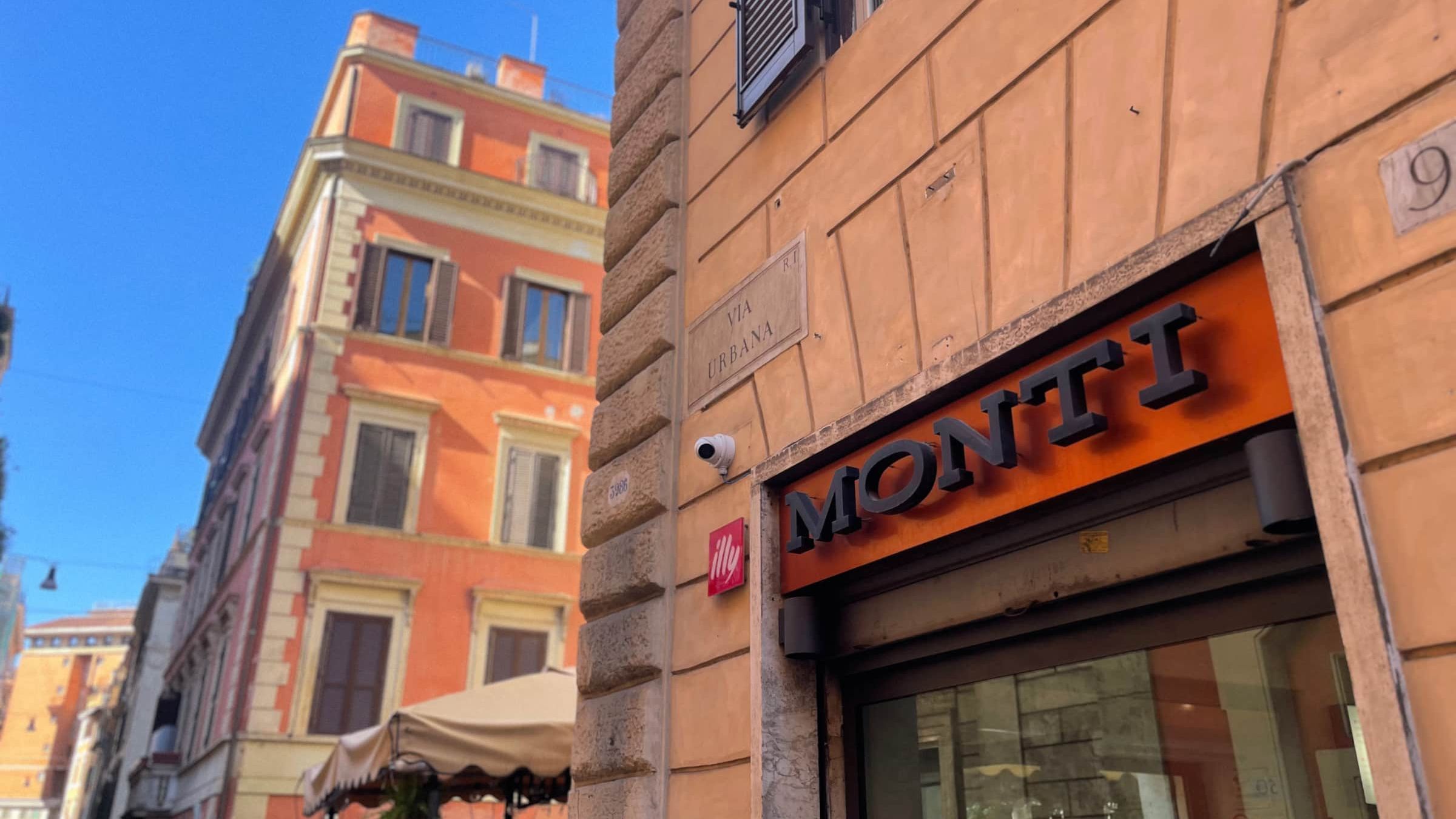
People are often surprised when I tell them I did not choose Trastevere, or the streets behind Piazza Navona, or somewhere with a terrace and a view of a dome. I chose Monti. I chose a steep cobbled lane in the first rione of Rome, three flights up, no lift, with a market at one end and a basilica at the other.
I have never once regretted it, and this is the reasoning, set out honestly, for anyone deciding where to base themselves in this city.
Sophistication is not the same as grandeur
Rome has a great deal of grandeur and rather less sophistication. The two are easy to confuse. Grandeur is the marble, the domes, the sweep of a staircase; the city has more of it than anywhere on earth and it is free to look at.
Sophistication is quieter and much harder to manufacture. It is a street where the shopfronts are small and independent, where the person who made the thing is standing behind the counter, where the wine list has been chosen by somebody with an argument to make. It is a neighbourhood with a point of view.
Monti has that, and it has it without effort, because it was never planned as a destination. It simply carried on being a place where people lived while the rest of the centre was gradually converted into somewhere to visit.
What that looks like on an ordinary Tuesday
The test I would apply to any neighbourhood is this one: what happens there on a Tuesday in February, when nobody is on holiday?
In Monti the answer is that the market on Via Baccina opens, the pharmacies on Via dei Serpenti are busy, somebody is having a bicycle repaired, the bar is full of people standing up and drinking coffee in ninety seconds, and at seven in the evening the piazza fills with people who have finished work and want a glass of something before dinner. The shops are open because the neighbourhood needs them, not because a coach is due.
That is the whole difference, and you can feel it within an hour of arriving.
The geography does an enormous amount of work
Monti sits in the valley and on the slopes behind the Imperial Fora, bounded roughly by Via Cavour, Via Nazionale, Via dei Fori Imperiali and the Esquiline hill. Look at where that puts you.
The Colosseum is six to eight minutes downhill on foot. The Roman Forum is five. Trajan’s Markets, the Domus Aurea, San Pietro in Vincoli, Santa Maria Maggiore, the Trevi Fountain and the Quirinale are all a walk rather than a journey. Termini, which is the hub for both airports and every intercity train in the country, is a few minutes away, and Cavour on metro line B is at the bottom of the neighbourhood. Since December 2025 the new line C station at the Colosseum has been there too.
I do not think there is another address in Rome that gives you that much city for that little walking. That is not a matter of taste. It is a map.
The streets have not been flattened
Monti has no grid, because the lanes follow a valley floor and the property lines of people who have been dead for two thousand years. Via Urbana runs like a spine through the middle of it. Via del Boschetto carries the shops. Via dei Serpenti cuts down toward the Fori. Via Panisperna takes the high, quiet route with the views back over the roofs.
They all converge on Piazza della Madonna dei Monti, a small sloping square with a fountain that functions as the neighbourhood’s living room. Nobody organises what happens there. It simply happens, every evening, from about seven.
You will get lost in these lanes for the first two days. Then, quite suddenly, you will not, and you will start taking the shortcut past the church without thinking about it, and that is the moment Rome stops being a place you are visiting.
The part nobody puts in the brochure
I should be fair about the costs, because they are real.
Monti is a hill, and everything you walk down in the morning you walk back up in the evening. The cobbles are hard on thin shoes and harder on prams. The buildings are old, which means most of them have no lift, ours included. It is residential, so there are deliveries at eight in the morning and church bells whether or not you were asleep. And it is not the place to stay if what you want is a hotel with a spa and a concierge who will do the thinking for you.
If any of that sounds like a deal-breaker, believe yourself. Some people are much happier in a different part of Rome, and I would rather say so.
What I would tell you over a glass of wine
Stay in Monti if you want to live in Rome for a week rather than tour it. Stay here if the thought of buying pasta from the man who made it that morning and cooking it in your own kitchen appeals more than a hotel breakfast buffet. Stay here if you would like to walk to the Colosseum before it opens, come home for lunch, and go out again at six because the light in the evening on these ochre walls is the best thing in the city.
That is why I chose it, from a long way away, and it is why I am still here.
If you want the practical version, with names, addresses and walking times, I keep it all in my guide to Monti. And if you would like to try the neighbourhood from the inside, the apartment is on Via Urbana, three flights up, with the market at one end of the street.