
Monti or Trastevere? An Honest Comparison for First-Time Visitors
They get recommended in the same breath and they are not the same kind of place at all. Here is the difference, including the parts that do not flatter us.
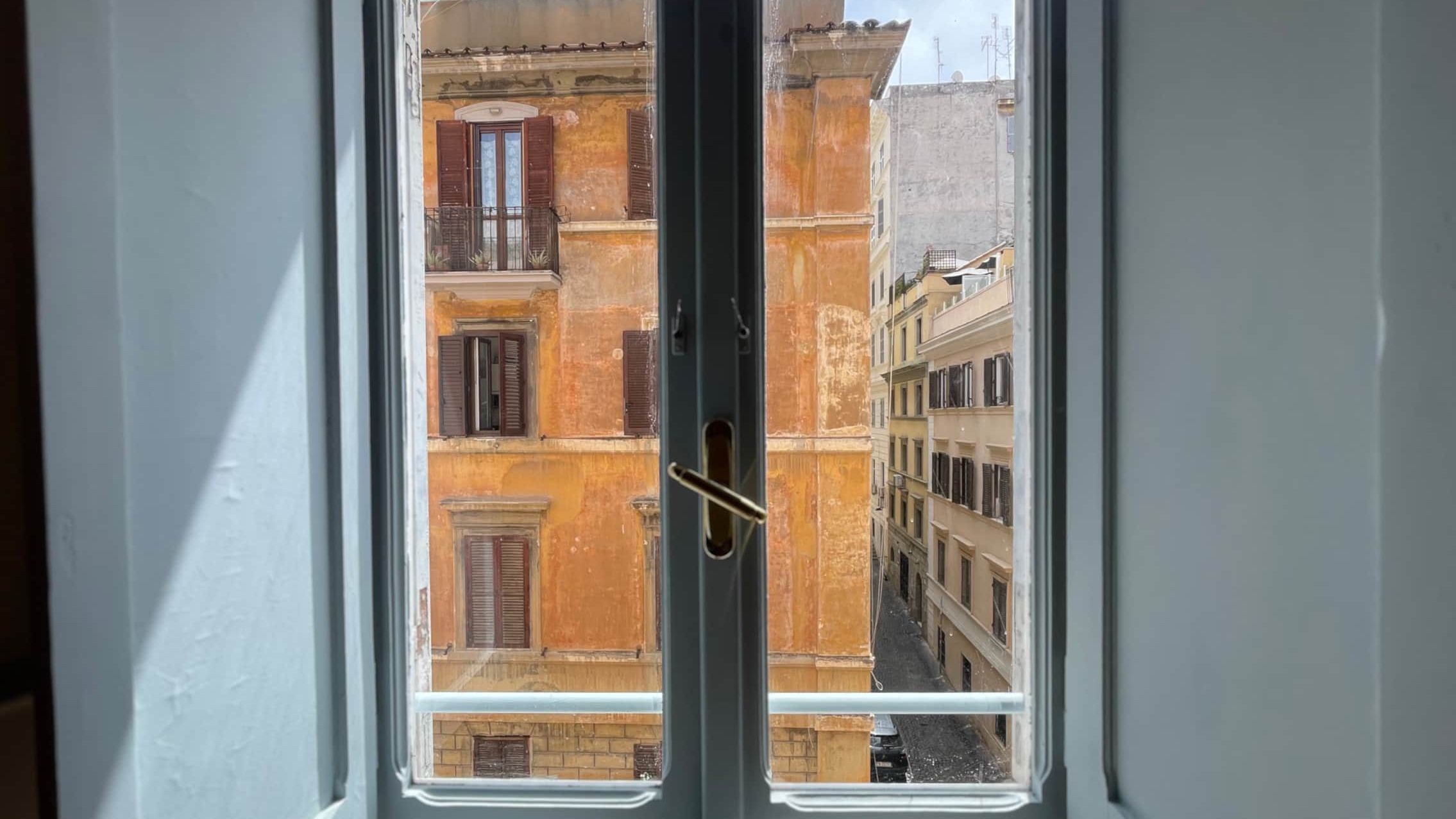
Ask the internet where to stay in Rome and you will be told Monti or Trastevere, usually in the same sentence, as though they were interchangeable. They are not. They are on opposite sides of the river, they feel different at nine in the morning and very different at midnight, and the choice between them will shape your week more than the apartment you pick inside either one.
I live in Monti and I let an apartment here, so please read this knowing exactly where I stand. I have tried very hard to be fair about the things Trastevere does better than we do, partly because you would discover them anyway, and mostly because I would far rather you had the right holiday than that I had the booking.
Where they actually are
Monti is the first rione of Rome, on the slope between the Roman Forum and Santa Maria Maggiore. It is inside the ancient city: this ground was the Suburra, the crowded quarter where most Romans lived. From Monti you walk downhill to the Colosseum and the Forum, west to the Trevi Fountain and the Quirinale, and uphill to the basilicas of the Esquiline.
Trastevere is across the Tiber, south-west, tucked under the Janiculum hill. Historically it was outside the city proper, trans Tiberim, across the river, a working district of dockers, tanners and immigrants. Today it is the postcard: ochre walls, ivy, medieval lanes that do not go where you expect.
That geography drives everything else.
Getting around
This is where Monti wins clearly, and it is not close.
Monti has Cavour on metro line B, and Termini, the hub for both airports and every intercity train, is one stop away. The Colosseum and the Forum are a walk, not a journey. Most of the classical centre is reachable on foot from a Monti front door without ever getting on anything.
Trastevere has no metro station. It has trams and buses, which are pleasant and slower, and a tram ride at eleven at night after a long dinner is a different proposition from a five-minute walk home. If you are arriving by train with luggage, or catching an early flight, Trastevere adds a leg to every journey.
If your trip is built around the ancient sites, the Colosseum, Forum, Palatine and Capitoline, Monti puts you inside that cluster. If it is built around the Vatican, Trastevere is closer.
Noise, and who it belongs to
Here is the honest part.
Trastevere at night is loud. It is genuinely, structurally loud: the piazzas fill, the bars spill, and a street of stone buildings with shuttered windows funnels sound upward until three in the morning. Some people come to Rome precisely for that, and if you are one of them, Trastevere is not a compromise. It is the point.
But it means that in Trastevere the choice of street matters enormously. A flat on Piazza Santa Maria will be beautiful and you will not sleep. A flat four lanes back will be lovely and quiet. You cannot tell which you have booked from photographs.
Monti is quieter, but I want to be precise about what that means. Monti has bars and they are busy, particularly around Via del Boschetto and the Madonna dei Monti fountain, where people sit on the steps until late. It is not a silent residential suburb. It is a neighbourhood where the noise stops at a reasonable hour because the people making it live here and have work in the morning.
Both are also real Italian buildings, which means church bells, scooters, and a rubbish truck at six. Anyone who tells you their central Rome apartment is silent is selling you something.
Food
Trastevere has more restaurants. Monti has, I would argue, better odds.
That sounds like local chauvinism, so here is the mechanism. Trastevere’s sheer volume of visitors supports a large tier of restaurants that survive on people who will only eat there once. Those places are not bad, exactly; they are indifferent, because indifference is not punished. The excellent restaurants of Trastevere are genuinely excellent, and you need to know which ones they are.
Monti’s restaurants sit on streets where a meaningful share of the tables are taken by people who live within four hundred metres. That is a harsher market. It does not guarantee a good dinner, but it changes the base rate, and it means wandering into somewhere unresearched is a lower-stakes decision.
Both neighbourhoods have the standard central-Rome trap: anything with a photographic menu, anything with someone outside inviting you in, anything directly facing a monument. That rule is universal and it holds in both places.
Shopping and the daytime
Monti is a shopping neighbourhood in a way Trastevere is not. Via del Boschetto, Via Urbana, Via dei Serpenti and Via Panisperna carry independent clothing, vintage, ceramics, bookbinding, and small design studios. There is a long-running vintage market. It is the sort of place where an afternoon disappears without a plan.
Trastevere’s daytime pleasure is different and, on its own terms, unbeatable: it is for walking without a destination. The lanes are the attraction. Santa Maria in Trastevere with its gold mosaics, the Sunday market at Porta Portese, the climb up the Janiculum for the view over the whole city.
Who each one suits
Choose Monti if: it is your first trip and you want the ancient sites on foot; you are arriving or leaving by train or plane and want the metro close; you value sleeping; you like independent shops; you are travelling with family and want somewhere with a functioning normal-life infrastructure.
Choose Trastevere if: you have seen the Colosseum already; the evening matters more to you than the morning; you are going to the Vatican repeatedly; you want the most photogenic streets in the city outside your door and will accept the crowds that come with them.
Choose either if you just want to be central and walkable. Both genuinely are, and the difference between them is character rather than quality.
A note on the third option
People often ask about staying near Termini, because it is cheap and connected. It is connected. It is not a neighbourhood in the sense that Monti and Trastevere are. It is a transport district with hotels attached, and the streets do not reward walking. The saving is real and so is the cost of it.
The Centro Storico proper, around the Pantheon and Piazza Navona, is magnificent and expensive, and after eight in the evening a surprising amount of it empties out into a stage set. Beautiful, but you are paying a lot to be a visitor in a place with very few residents left.
What I would tell a friend
If this is your first time in Rome and you have three or four days, stay in Monti. Almost everything you have come for is inside the walking radius, the metro is there on the day your legs give out, and you get to live in a neighbourhood instead of visiting an attraction.
If you are coming back for the fourth time and what you want is to eat late, drink later and wander home through lanes, stay in Trastevere, and choose your street with care.
And if the price gap between the two is large, take the cheaper one without a second thought. Both of these neighbourhoods are lovely. Neither of them is the reason a week in Rome turns out well, which is almost always down to how slowly you were willing to walk.