
Rome With Kids: Why Two Bedrooms Changes the Whole Trip
Two bedrooms, two bathrooms, a kitchen and a neighbourhood with a greengrocer in it. The unglamorous things that decide whether a family trip to Rome works.
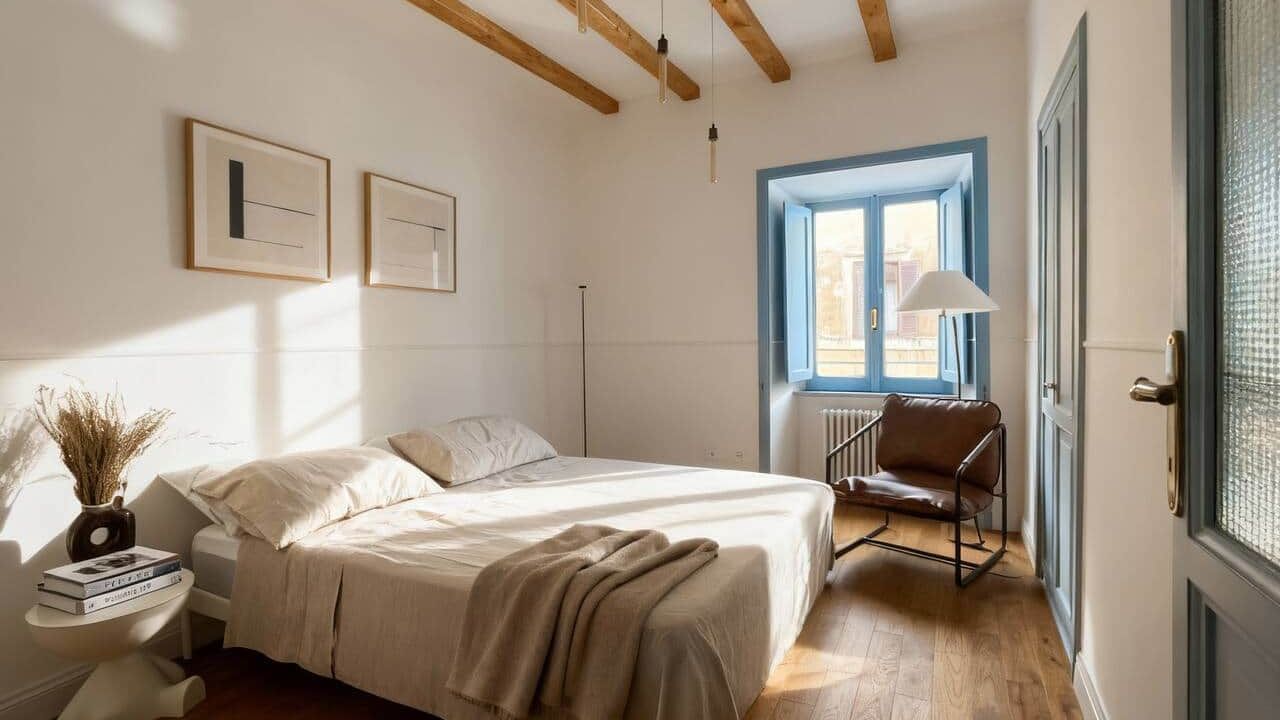
The difference between a family holiday in Rome that people remember fondly and one they recover from is almost never the sightseeing. It is whether the adults had an hour to themselves after eight in the evening, whether anybody dissolved in a queue at noon, and whether breakfast was a negotiation or a pleasure.
All three of those are settled by where you sleep, not by what you go to see. I have hosted a great many families in this apartment, and I have watched which ones arrive at the end of the week still enjoying each other.
The case against the hotel room
A family of four in one hotel room in central Rome means everybody goes to bed at the same time. That is the whole argument, and it is more decisive than it sounds.
Small children in a strange city, walked around all day in unfamiliar heat, need to be asleep at eight. If you are in the same room, so are you, lying in the dark at half past eight in Rome, whispering. Do that for four nights and the adults come home needing a holiday.
Two bedrooms means the children sleep and the grown-ups have an evening. A door between them is worth more than a view.
Then there are the smaller things that stack up:
Two bathrooms. Six people and one bathroom is a queue at the start and end of every day. Two turns the morning from a negotiation into a routine.
A kitchen. Not for cooking elaborate dinners, because you are in Rome and should eat out, but for the first hour of the day. Cereal, milk, fruit, coffee made properly, everyone at their own pace. Dragging tired children out to find breakfast is a fight you can simply not have. It also means you can feed a child at six when they are hungry and still eat properly yourselves at half past eight.
A washing machine, when there is one. Anyone who has travelled with a small child and a single change of clothes understands.
Space to be bored in. Children need a couple of hours in the afternoon doing nothing much, on a floor, with their own things. A 90 m² apartment gives them that. A hotel room does not, and the consequence arrives at about five in the afternoon.
Why the neighbourhood matters more than the address
Central Rome has districts that are magnificent and districts that are liveable, and they are not always the same ones.
Staying somewhere directly on the monuments means every meal is a tourist restaurant at tourist prices, there is nowhere to buy nappies, and there is nothing open in the morning that is not a café with four tables. Staying in a residential rione means there is a greengrocer, a pharmacy, a supermarket and a bakery, because people live there and need those things.
Monti is a rione where people live. That has an unglamorous, decisive value when you are travelling with children: the infrastructure of ordinary life is right there, and you are still ten minutes’ walk from the Roman Forum.
It also means an early evening in the neighbourhood counts as an activity. Children who have been marched round ruins all day are perfectly happy sitting on the steps of a fountain in a small piazza with an ice cream while the adults have a drink and do not move.
What actually works with children in Rome
The Colosseum works. It is the one big ancient site that children immediately understand, because the concept needs no explanation. Book an early slot. The queue and the midday heat are what ruins it, not the monument. Standard entry is €18 and includes the Forum and Palatine.
The Palatine works better than the Forum. The Forum is a field of stones that requires imagination and a guidebook; the Palatine is a hill with gardens, shade, and a view down over the whole thing. Children do better with the hill.
San Clemente works surprisingly well. You go underground through three layers of buildings, from a medieval church to a Roman street with running water in the dark. It is an adventure with a floor plan.
The nasoni work. The little iron street fountains run constantly with cold drinking water, and blocking the spout with a finger makes it arc up into your mouth. This is, reliably, in the top three things any visiting seven-year-old remembers about Rome. Carry a refillable bottle.
Gelato works, obviously, and it is also a legitimate scheduling tool. One well-timed gelato buys forty more minutes of walking.
The Vatican Museums are hard. Enormous, extremely crowded, slow-moving, and mostly paintings above a child’s eye line. If the Sistine Chapel matters to you, go, but treat it as an adult’s day out and set expectations accordingly. St Peter’s itself, being vast and free and vertical, does much better.
Villa Borghese is the pressure valve. A large park with grass, shade, bicycle hire and space to run. Every family trip to Rome needs one afternoon that is not history, and this is it.
The practical warnings
The cobbles are hard on prams. Sampietrini, small basalt cobbles, uneven and polished, are beautiful and genuinely awkward with a buggy. A lightweight pram with small wheels will fight you. Many parents find a carrier easier for a small child in the centre.
Stairs are common. Historic buildings in central Rome frequently have no lift, and our apartment is a case in point: it is on the third floor, up three flights, with no lift. With a pram and a toddler that is a real consideration and we would rather you weighed it before booking than discovered it on arrival.
The heat in July and August is serious. Not merely warm but genuinely punishing between eleven and four, on stone that holds it. Plan mornings and evenings, and go back to the apartment in the middle of the day. This is the single best reason to have somewhere comfortable to return to.
Romans like children. This is worth saying because it surprises people from more child-averse cultures. A child in a restaurant is not a problem to be managed; waiters will talk to them, and nobody minds a bit of noise. Eating out with children in Italy is easier than almost anywhere.
Cover shoulders and knees for churches. It applies to children too, and being turned away at the door after a hot walk is a bad moment for everybody.
How many can actually sleep here
Our apartment sleeps six: two bedrooms with a queen bed each, plus a sofa bed, across 90 m² with two bathrooms.
The honest version of that: it is comfortable for four, and it works for six. Two couples, or two adults and two or three children, have plenty of room. Six adults is legitimately six adults in a flat.
The third floor and the absence of a lift are stated on every page of this site, because they are the thing guests most often wish they had registered before booking. Everything else about the place suits families well. Those stairs suit nobody carrying a sleeping child.
The trip that works
Two or three days, one major site each morning, back to the apartment for the hot part of the afternoon, out again at six when the city gets pleasant and the children get a second wind.
That rhythm only works if you have somewhere you genuinely want to return to in the middle of the day: a kitchen, a bath, two doors that close, a table to sit around at six o’clock with bread and cheese while everybody recovers. That is the whole argument for an apartment in a neighbourhood where people live, rather than a room beside a monument, and it is the argument I would make to my own family.